LANDSCAPE · E0038
当信仰学会顺应山水
Where Faith Learns from the Land
WORD BY WORD
进入逐词听读模式
顶部配图随进度轮播,未读文字为白色,读到后逐词变黄。
用约三分钟英文,从峨眉山的垂直森林与依山寺院,讲到乐山大佛藏在发髻和衣纹中的排水智慧,理解自然、信仰与工程如何共同构成一处文化景观。
THREE THINGS TO KNOW
- 01
联合国教科文组织认为,峨眉山在佛教传入并传播于中国的历史中具有重要意义,山上形成了延续近两千年的佛教文化遗产。
- 02
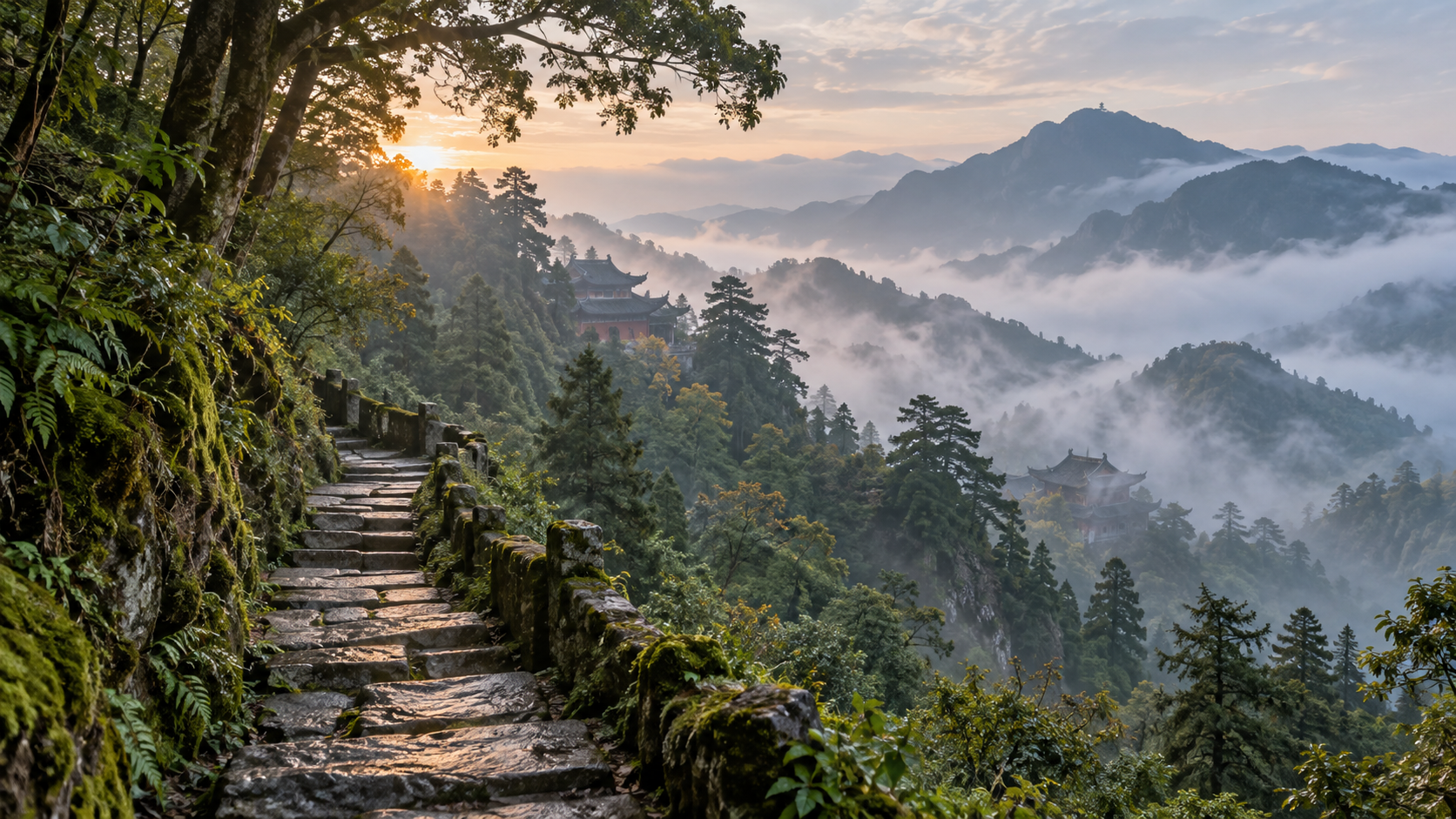
峨眉山现有三十多座寺院,许多建筑依山坡和地形选址、设计与建造,形成自然与文化紧密结合的景观。
- 03
峨眉山遗产地的相对高差约2600米,植被从亚热带常绿阔叶林延伸至亚高山针叶林。
BILINGUAL TRANSCRIPT
双语全文
Mount Emei and the Leshan Giant Buddha show how people worked with mountains, forests, and rivers to give belief a lasting home.
峨眉山与乐山大佛讲述着同一个故事:人们顺应山岳、森林与江河,为信仰找到一个长久安放之地。
This landscape does more than join a holy mountain and a famous statue; it shows culture becoming part of nature.
这片景观不只是让一座佛教名山与一尊著名造像彼此相邻,更展现了文化如何成为自然的一部分。
Mount Emei rises through about 2,600 metres of elevation.
在峨眉山,地势跨越约2600米的相对高差不断抬升。
As visitors climb, subtropical evergreen forests give way to mixed woods and then colder mountain forests.
随着游人向上攀登,亚热带常绿林逐渐过渡到混交林,再变为更寒冷的山地森林。
This wide natural range supports around 3,200 plant species and about 2,300 animal species.
这种丰富的自然梯度孕育了约3200种植物和约2300种动物。
What makes the forest special is not only its variety, but also its old Buddhist paths and temples.
这片森林的特别之处,不仅在于物种多样,也在于它环抱着古老的佛教山路与寺院。
Buddhist culture has developed here for nearly two thousand years, helping it spread through China.
佛教文化在这里发展了近两千年,并推动了它在中国的传播。
More than thirty temples were built here, many carefully fitted to slopes and natural landforms.
山上建起了三十多座寺院,其中许多都顺着山坡与自然地形精心布局。
Rather than standing apart, their halls and courtyards borrow quietness from the surrounding trees.
寺院的殿堂和院落没有与森林割裂,而是从周围林木中借来一份宁静。
By building within the forest, people made the journey upward both physical and spiritual.
通过把宗教建筑安放在森林之中,建造者让上山之路既成为身体的攀登,也成为精神的体验。
About forty kilometres away, the same respect for land takes another form beside three rivers.
大约四十公里外,同样的顺应山水,在三江之畔呈现出另一种形态。
The Leshan Giant Buddha faces the meeting point of the Minjiang, Dadu, and Qingyi rivers.
乐山大佛面向岷江、大渡河与青衣江的汇流处。
Carved from 713 to 803, the seated Maitreya rises 71 metres from the red cliff.
这尊弥勒佛坐像从713年开凿至803年完成,自红色山崖中拔起71米。
It is not simply placed on the mountain; it is formed from the mountain itself.
它并非简单地被放在山上,而是直接由山体塑造而成。
Yet size tells only half the story, because careful details protect the statue from rain and dampness.
然而,宏大的体量只讲出了一半故事,因为精细设计保护造像免受雨水与潮湿侵扰。
Ancient workers hid drainage channels among the Buddha's hair, behind the ears, across the chest, and along the robe.
古代工匠把排水通道藏在大佛的发髻之间、耳后、胸部以及袈裟衣纹之中。
Rain was guided away, while openings controlled moisture and moved air through the structure.
雨水得以被引走,孔洞也帮助控制湿气,并让空气在结构中流动。
What looks like decoration therefore also works as protection, joining beauty with practical engineering.
因此,看似装饰的部分同时也承担着保护功能,把美感与实用工程结合起来。
Only by noticing these channels can we understand the thought behind that calm face above the rivers.
只有注意到这些隐蔽通道,我们才会明白,三江之上的安详面容背后凝聚着多少巧思。
In 1996, both places were inscribed together as one cultural and natural World Heritage property.
1996年,峨眉山与乐山大佛共同作为一项世界文化与自然双重遗产列入名录。
That shared name matters: forest, temples, cliff statue, and rivers form one cultural landscape.
这个共同的名字意义深远,因为森林、寺院、崖壁造像与江河本就是同一片文化景观的组成部分。
Seen together, they show that belief shaped how people entered the landscape, while the landscape shaped their art and engineering.
把它们放在一起看,便会发现:信仰影响了人们进入山水的方式,而山水也塑造了他们的艺术与工程。
What matters is not the power to defeat nature, but the wisdom to read its slopes, forests, stone, and water.
真正重要的不是战胜自然的力量,而是读懂山坡、森林、岩石与流水的智慧。
At Emei and Leshan, stone, water, trees, and human hands still speak in the same quiet voice.
在峨眉与乐山,岩石、江水、林木和人的双手,至今仍用同一种安静的声音诉说。