LANDSCAPE · E0057
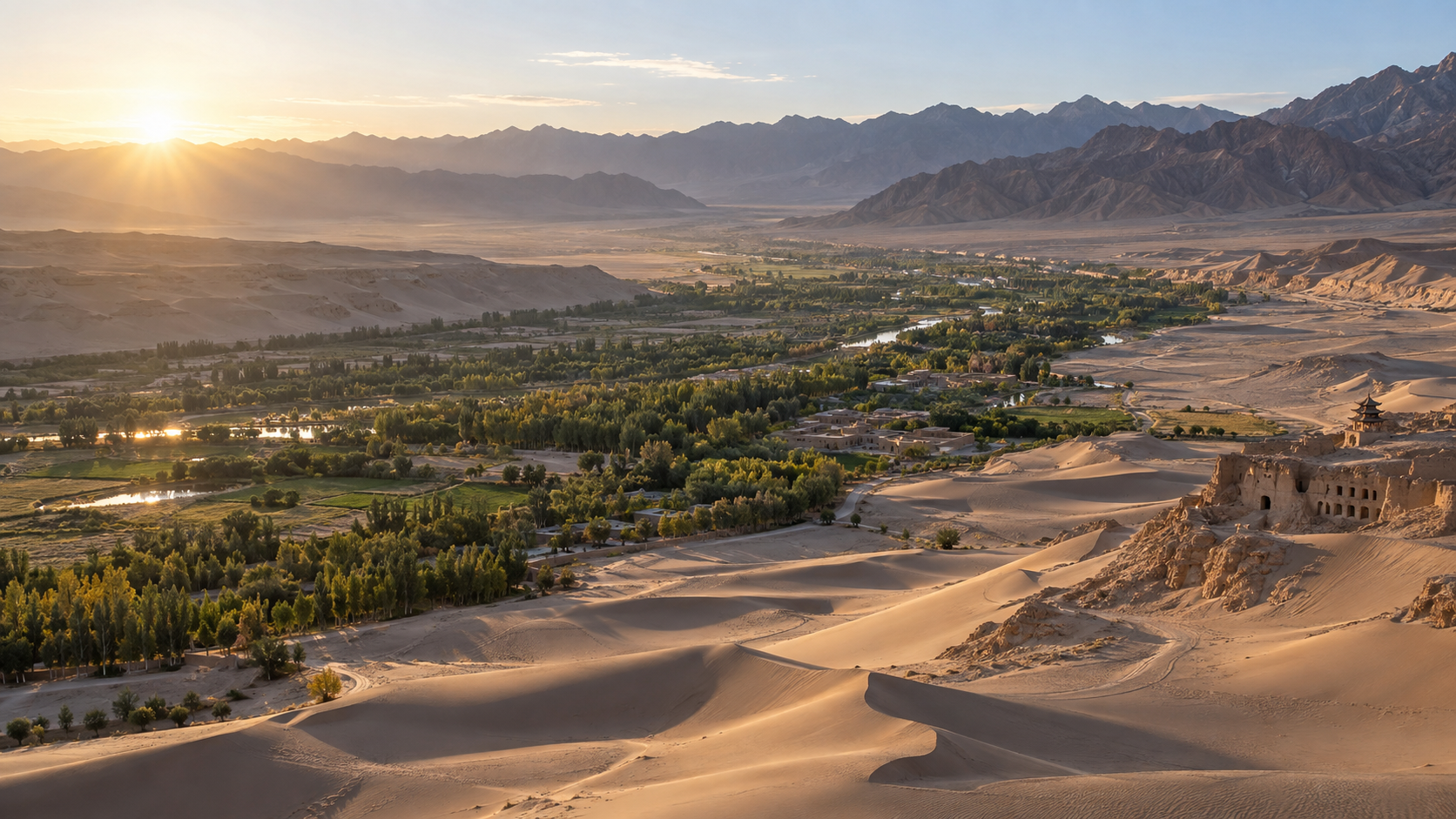
敦煌:移动的沙遇见墙上的时间
Dunhuang: Where Moving Sand Meets Painted Time
WORD BY WORD
进入逐词听读模式
顶部配图随进度轮播,未读文字为白色,读到后逐词变黄。
从沙漠绿洲、莫高窟崖壁和丝路交流走到鸣沙、月牙泉、风沙防护与数字档案,理解敦煌如何在运动与保存之间延续。
THREE THINGS TO KNOW
- 01
敦煌位于河西走廊西端,是古代丝绸之路连接中原与西域的重要节点,贸易、宗教、文化和知识在此交汇。
- 02
莫高窟位于敦煌市东南约25公里、鸣沙山东麓和宕泉河西岸的断崖上,洞窟沿约2公里长的崖面分布。
- 03
莫高窟崖体主要为较疏松的砾石岩层,不适合直接雕刻精细石像,因此洞窟艺术以泥塑彩绘和壁画为主。
BILINGUAL TRANSCRIPT
双语全文
At Dunhuang, sand keeps moving outside, while painted time stays inside the cliff.
在敦煌,沙在崖外持续移动,画中的时间却留在崖壁之内。
This contrast grew at the Hexi Corridor's western end, where desert routes met an oasis.
这种对照生长在河西走廊西端,沙漠道路在这里遇见绿洲。
Dunhuang became an important point in the Silk Road network, linking central China with regions farther west.
敦煌成为丝绸之路网络上的重要节点,把中原与更西边的地区连接起来。
Twenty-five kilometers southeast of the city, the Mogao Caves were cut into a cliff at Mingsha Mountain's eastern foot.
在敦煌城东南25公里处,莫高窟开凿在鸣沙山东麓的断崖上。
The loose rock was unsuited to fine stone carving, so artists shaped clay figures and painted prepared walls.
这里的岩层疏松,不适合精细石雕,因此工匠塑造泥质彩塑,并在处理过的墙面上作画。
From the fourth to fourteenth century, generations added caves, images, and new ways of seeing.
从4世纪到14世纪,一代又一代人增建洞窟、图像,也留下新的观看方式。
UNESCO records 492 caves, about 45,000 square meters of murals, and more than 2,000 painted sculptures.
联合国教科文组织记录了492个洞窟、约45000平方米壁画和2000多身彩塑。
Yet the numbers matter less than what the walls did: they turned movement into memory.
然而,比数字更重要的是这些墙壁所做的事:它们把流动变成了记忆。
Merchants, monks, artists, and travelers carried beliefs, stories, goods, and skills through this crossroads.
商人、僧侣、工匠和旅人经过这个路口,带来信仰、故事、货物与技艺。
Inside the caves, Buddhist art stands beside images of farming, processions, cities, mountains, roads, and caravans.
在洞窟里,佛教艺术与农作、行列、城市、山岳、道路和商队的图像并存。
What arrived from afar did not remain foreign; local artists gave shared ideas new colors and forms.
远方到来的事物并未一直显得陌生;本地工匠为共同观念赋予了新的色彩与形式。
The painted cliff thus became an archive of people meeting one another across distance and time.
于是,这面画满图像的崖壁成为一座档案馆,保存着人们跨越距离与时间的相遇。
Mingsha Mountain keeps a different kind of archive, one that wind rewrites every day.
鸣沙山保存着另一种档案,一种每天都会被风重新书写的档案。
Several wind directions push sand up and across the slopes, helping build the mountain's great star-shaped dunes.
多个方向的风把沙粒推上并带过山坡,塑造出鸣沙山巨大的星形沙丘。
When many dry grains slide together, their movement can produce the deep sound that gives the mountain its name.
当许多干燥沙粒一同滑动时,它们的运动能够产生低沉声响,这也赋予鸣沙山它的名字。
Crescent Spring lies among these dunes, fed mainly by groundwater while the surrounding wind keeps reshaping the sand.
月牙泉位于这些沙丘之间,主要由地下水补给,周围的风则持续重塑沙地。
Here, sand is both scenery and pressure: what makes the landscape memorable can also threaten the caves.
在这里,沙既是景观,也是压力:让这片土地难忘的事物,也可能威胁洞窟。
Drifting sand once reached cave entrances; today, barriers and plants guide, block, and hold it back.
流沙曾抵达洞窟门口;今天,屏障与植物共同引导、阻挡并固定风沙。
The more closely the murals are protected, the more carefully each visit must be managed.
壁画保护得越细致,每一次参观就越需要谨慎管理。
People change a cave's temperature, moisture, and carbon dioxide, so sensors watch its air minute by minute.
人会改变洞窟的温度、湿度和二氧化碳浓度,因此传感器按分钟监测窟内空气。
Digital images, panoramas, and three-dimensional models create another record outside the fragile rooms.
数字图像、全景和三维模型在脆弱洞窟之外建立起另一份记录。
Protection does more than freeze the past; it manages how the past and the present meet.
保护不只是冻结过去;它还管理过去与现在相遇的方式。
Dunes move, paintings age, and careful records help future eyes compare change.
沙丘移动,壁画老化,而细致记录帮助未来的人比较变化。
Dunhuang lasts because it keeps finding a balance between moving sand and painted time.
敦煌之所以延续,是因为它不断在移动的沙与画中的时间之间寻找平衡。