LANDSCAPE · E0056
洞庭湖与岳阳楼:水如何成为记忆
Dongting Lake and Yueyang Tower: Where Water Becomes Memory
WORD BY WORD
进入逐词听读模式
顶部配图随进度轮播,未读文字为白色,读到后逐词变黄。
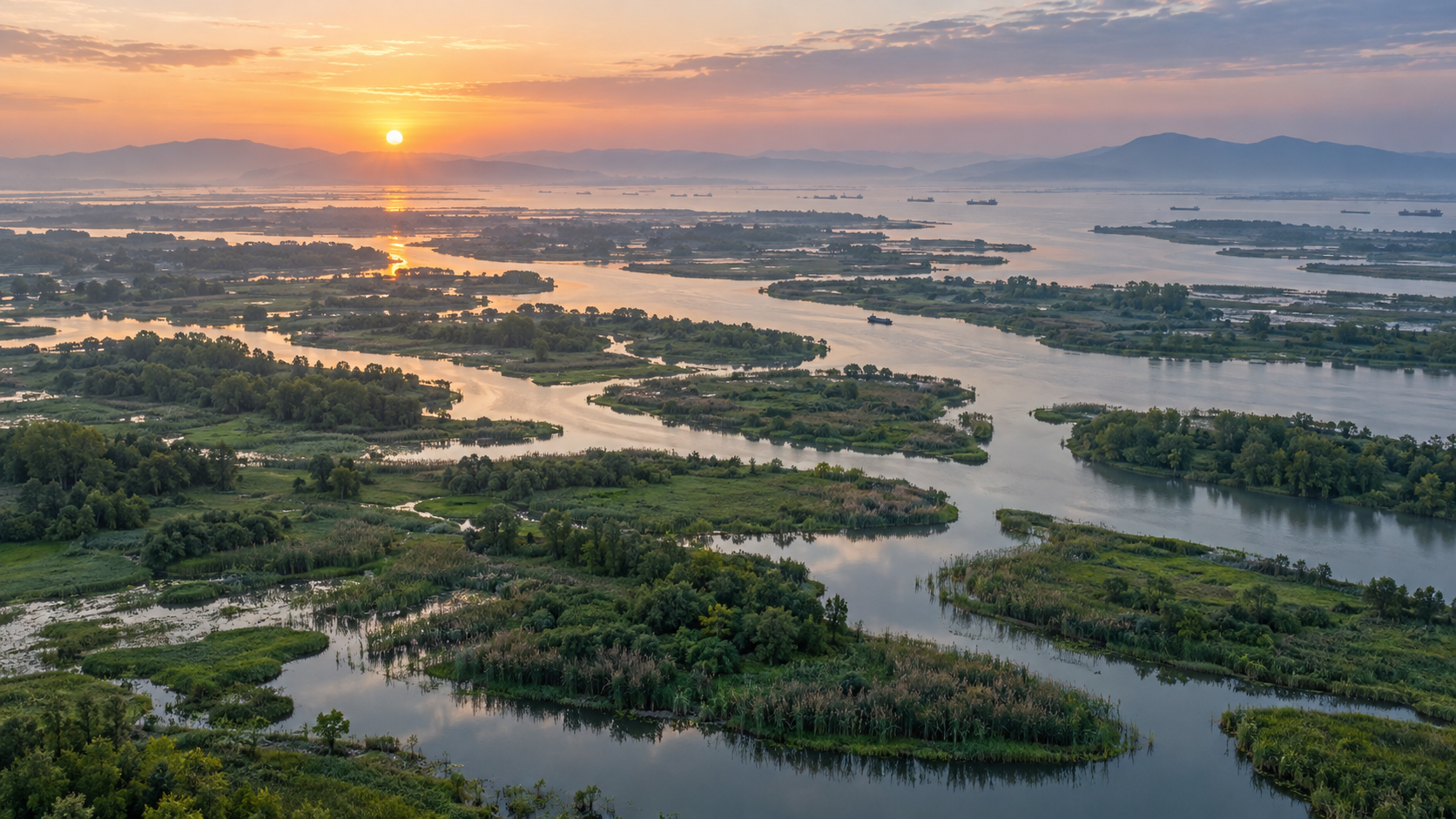
从长江分流与湘资沅澧、汨罗江汇成的水网,到东洞庭湖的候鸟迁飞,再到岳阳楼与《岳阳楼记》的文学记忆,理解自然与文化如何彼此照亮。
THREE THINGS TO KNOW
- 01
洞庭湖位于长江中游南岸,分布在湖南多个县市之间,岳阳是其重要城市节点。
- 02
洞庭湖接纳长江松滋、太平、藕池、调弦四口分流,湘江、资水、沅江、澧水和汨罗江等从南部和西部汇入,并在岳阳城陵矶出湖注入长江。
- 03
洞庭湖是长江重要的防洪调蓄湖泊,承担洪水调节和蓄滞作用。
BILINGUAL TRANSCRIPT
双语全文
Dongting Lake is more than a wide piece of water; it is a living network that connects rivers, wetlands, birds, and a city's memory.
洞庭湖不只是一大片水面;它还是一张有生命的网络,把江河、湿地、候鸟和一座城市的记忆连接起来。
It lies on the south bank of the middle Yangtze, in Hunan Province, across several counties and cities.
它位于湖南的长江中游南岸,分布在多个县市之间。
Yueyang stands beside this meeting place.
岳阳就坐落在这处相遇之地旁。
Four channels from the Yangtze enter the lake from the north.
长江的四条分流从北面进入洞庭湖。
From south and west, Xiang, Zi, Yuan, Li, and Miluo Rivers join it.
从南面和西面,湘江、资水、沅江、澧水和汨罗江汇入湖中。
At Chenglingji, water flows back into the Yangtze.
在城陵矶,湖水又流回长江。
This is not a closed bowl; it is a moving bridge between rivers.
这不是一只封闭的碗;它是一座连接江河的流动桥梁。
It stores floodwater for the Yangtze, giving the landscape a public duty.
它为长江蓄滞洪水,让这片风景承担着公共职责。
To understand Dongting, follow water before counting its size.
要理解洞庭湖,先追随水的路径,再去计算它的大小。
Those paths also guide life.
这些路径也引导着生命。
East Dongting is an important wetland on the East Asian–Australasian Flyway, a route for migrating birds.
东洞庭湖是东亚—澳大利西亚迁飞区上的重要湿地,这是一条候鸟使用的漫长路线。
In winter, waterbirds gather around shallow water and grassland edges, resting on their journey.
冬季,水鸟聚集在浅水和草洲边缘,湖泊也成为它们旅途中的休息地。
A flock crossing the horizon is more than a beautiful scene; it shows distant places are connected.
因此,一群候鸟飞过地平线不只是一道美景;它还说明遥远的地方彼此相连。
Wetland restoration and regular monitoring help keep these seasonal spaces open.
湿地修复和持续监测,有助于让这些季节性的空间保持开放。
The most famous way to read Dongting may begin from a building.
阅读洞庭湖最著名的方式,也许要从一座楼开始。
Yueyang Tower stands in Yueyang's west gate wall, looking over Dongting toward Junshan.
岳阳楼坐落在岳阳古城西门城墙上,俯瞰洞庭湖,遥望君山。
Its role changed over time: from a military lookout, to part of the city gate, and then to a place for viewing and remembering.
它的功能随时间变化:从军事瞭望处,到城门建筑的一部分,再成为登临观景与寄托记忆的地方。
What matters is not only the tower, but the wider water it teaches people to see.
重要的不只是岳阳楼,更是它教人看见的那片更广阔的水域。
In 1046, after Teng Zijing rebuilt the tower, Fan Zhongyan wrote Yueyang Tower Record at his request.
1046年,滕子京重修岳阳楼后请范仲淹作记,范仲淹写下了《岳阳楼记》。
The essay notices bright mornings, dark evenings, and changing weather, then asks what people owe others.
文章写到明亮的清晨、阴暗的傍晚和变化的天气,又追问人对他人负有什么责任。
Here, nature and culture do more than stand side by side; each gives the other a deeper meaning.
在这里,自然与文化不只是并肩存在;它们还彼此赋予更深的意义。
The lake gives the words a moving sky, while the words give the lake a memory beyond Yueyang.
湖泊为文字提供流动的天空,而文字让湖泊拥有走出岳阳的记忆。
Seen from the tower, birds, channels, distant banks, and roofs form one picture because water joined them.
从岳阳楼望去,候鸟、河道、远岸和屋顶同属一幅画面,因为水把它们连接起来。
At sunset, Dongting reminds us that a landscape lasts when natural paths and human stories illuminate one another.
日落时,洞庭湖提醒我们:当自然的路径与人的故事互相照亮,一片风景才能长久。