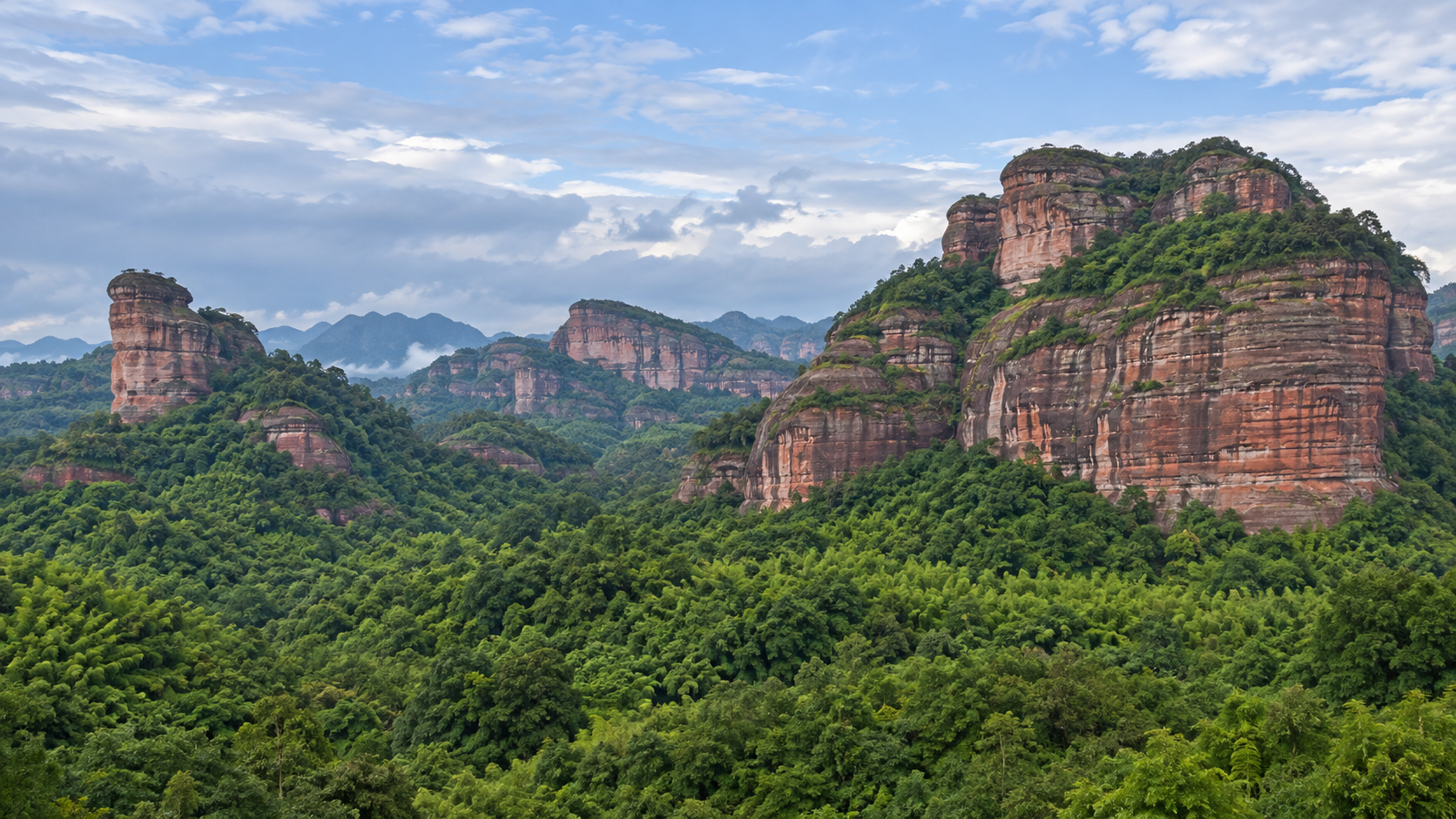
LANDSCAPE · E0042
丹霞山:把名字交给一种地貌的山
Mount Danxia: The Mountain That Gave a Landscape Its Name
WORD BY WORD
进入逐词听读模式
顶部配图随进度轮播,未读文字为白色,读到后逐词变黄。
从‘丹霞层’的命名走进红色砂砾岩,再沿锦江读懂峰林崖壁与森林生境,理解一座山如何成为科学名称,又如何靠共同保护延续这个名字。
THREE THINGS TO KNOW
- 01
丹霞山位于广东省韶关市,是丹霞地貌的命名地,山体主要由红色砂岩和砾岩构成。
- 02
1928年,冯景兰、朱翙声在粤北地质调查中命名丹霞山红色岩系及其沉积盆地为‘丹霞层’和‘丹霞盆地’;1938至1939年,陈国达提出并研究‘丹霞地形’。
- 03
中国丹霞发育在陆相红色沉积层上,红色砾岩和砂岩受到隆升、风化与侵蚀等内外力共同作用。
BILINGUAL TRANSCRIPT
双语全文
When a landscape type borrows its name from one mountain, that mountain becomes more than a view.
当一整类地貌借用一座山的名字时,这座山便不再只是一处风景。
Mount Danxia, in Shaoguan, Guangdong, is the place that gave Danxia landforms their name.
位于广东韶关的丹霞山,正是丹霞地貌的命名地。
In 1928, Chinese geologists named its red rock layers the Danxia Formation.
故事始于1928年,中国地质学家把这里的红色岩层命名为“丹霞层”。
A decade later, Chen Guoda used the name for landforms built from those layers.
大约十年后,地质学家陈国达又用这个名字称呼由这些岩层形成的地貌。
A local place became a word for reading red-rock landscapes far beyond Guangdong.
重要的是,一个地方名从此成为理解广东之外众多红岩景观的词语。
Imagine an inland basin receiving sand and rounded stones over a long time.
要理解这个词,可以想象一片内陆盆地在漫长岁月中不断接收沙粒与圆砾。
These materials hardened into reddish sandstone and conglomerate, a rock made from many pebbles joined together.
这些物质固结成红色砂岩和砾岩;砾岩就是许多砾石胶结而成的岩石。
The land later rose and cracked, while rain and flowing water entered the weaker lines.
后来,地层隆升并产生裂隙,雨水与流水则沿着较脆弱的线条进入岩体。
Erosion wore away softer parts and helped steep rock collapse, separating one mass into cliffs, walls, pillars, and peaks.
侵蚀磨去较软部分,又促使陡峭岩体崩塌,慢慢把整片岩体分成崖壁、石墙、石柱与山峰。
Mount Danxia thus looks less like one mountain than a stone city of narrow streets.
因此,丹霞山不像一座单独的山,更像一座布满狭窄街巷的石头城市。
It is not only the red colour but also the sharp contrast among rock, forest, and water that makes the scene memorable.
令人难忘的不只是红色,还有岩石、森林与水流之间鲜明的对照。
The Jinjiang River provides a clear route through this stone city.
锦江为穿行这座石头城市提供了一条清晰路线。
From a boat, one rock may look like a wall, then become a peak as the river changes your position.
在船上,同一块岩体可能先像一堵墙,随着河流改变你的观看位置,它又变成一座山峰。
Rather than standing outside the landscape, the river lets you read it page by page.
这条河不让你站在风景之外,而是带你一页一页读进去。
Yet Jinjiang does more than carry reflections of red cliffs and green trees.
然而,锦江不只承载红崖与绿树的倒影。
Together with the Zhenjiang River, it crosses a protected area where broken ground creates hilltop, valley, cave, and cliff habitats.
它与浈江一同穿过保护区域,而破碎的地形在这里形成山顶、沟谷、洞穴与崖壁生境。
Some plants survive on steep faces with little soil, while forests find shelter among ravines and slopes.
有些植物在土壤稀薄的陡壁上生存,森林则在沟谷与山坡之间找到庇护。
UNESCO notes that the rugged China Danxia landscapes help conserve subtropical evergreen forests and many plant and animal species.
联合国教科文组织指出,中国丹霞崎岖的地形有助于保存亚热带常绿森林和众多动植物。
Protecting the mountain therefore means caring for a living system of clean water, forest, rock, and small cliff habitats.
因此,保护这座山意味着守护由清洁水体、森林、岩石与细小崖壁生境构成的生命系统。
Scientists monitor geology, biodiversity, and the environment, and students can even join courses that test water quality.
科学家监测地质、生物多样性与生态环境,学生甚至可以参加水质监测课程。
By turning research into public education, the park invites local people and visitors to take part in its care.
通过把研究成果转化为公众教育,丹霞山邀请当地居民和游客共同参与守护。
A scientific name may begin with rock, but its future depends on how people treat the whole landscape.
一个科学名称或许始于岩石,但它的未来取决于人们如何对待整片山水。
Only when the river stays clear, the forest stays alive, and the cliffs stay protected can Mount Danxia keep giving meaning to its name.
只有河水保持清澈、森林充满生机、崖壁得到保护,丹霞山才能继续让自己的名字拥有意义。