CITY NOTES · E0027
大连:用海湾丈量一座城
Dalian: A City Measured in Bays
WORD BY WORD
进入逐词听读模式
顶部配图随进度轮播,未读文字为白色,读到后逐词变黄。
用约三分钟英语认识大连:从辽东半岛的丘陵与两侧海域,到港口、殖民历史、造船业和滨海公共生活,理解海湾如何塑造城市尺度。
THREE THINGS TO KNOW
- 01
Dalian lies at the southern end of the Liaodong Peninsula, with the Yellow Sea to the east and the Bohai Sea to the west; hills are common and flat lowland is limited.
- 02
National planning guidance asks Dalian to protect its historic urban pattern and highlight the organic meeting of mountains, sea, islands, and city.
- 03
Russia forced the lease of the Dalian area in 1898, and the modern city was formally established in 1899.
BILINGUAL TRANSCRIPT
双语全文
To understand Dalian, follow the curve of its bays.
要读懂大连,就沿着海湾的曲线前行。
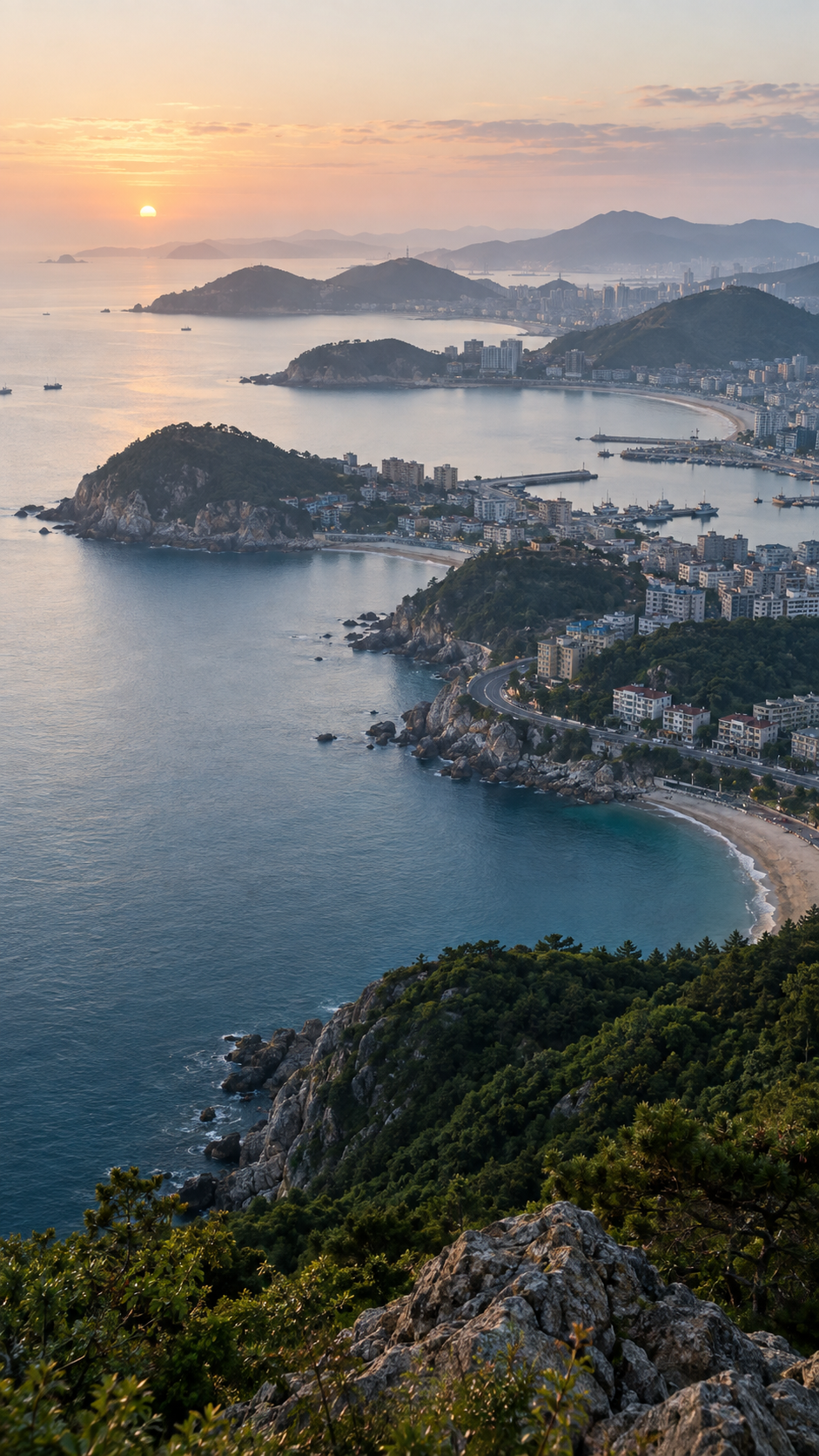
At the Liaodong Peninsula's southern end, Dalian faces the Yellow Sea east and the Bohai Sea west.
这座城市位于辽东半岛最南端,东临黄海,西接渤海。
With many hills and little flat land, streets often fit between slopes and water.
这里丘陵多、平地少,街道与社区常常安放在山坡和海水之间。
Geography does more than create a fine view; it gives Dalian its unusual urban scale.
地理不只创造了风景,也赋予大连不同寻常的城市尺度。
One bay holds docks, another a hillside road, and another welcomes families to the sea.
一处海湾容纳码头,另一处让道路贴着青山伸展,还有一处让一家人走近海边。
Modern Dalian took shape under foreign occupation in the late nineteenth century.
现代大连形成于十九世纪末一段沉重的外国侵占时期。
Russia forced a lease in 1898, and the city was formally established the next year.
1898年,沙俄强租这一地区;第二年,大连正式建市。
Port and city grew together, making the shore both a gateway and a tool of foreign control.
港口与新城一同生长,海岸既成为门户,也成为外来统治的工具。
Rather than calling it European style, we should ask who planned the city and lived under foreign rule.
与其把这段历史简单称作“欧式风情”,不如追问是谁规划城市,又是谁生活在那种统治之下。
Around Zhongshan Square, early twentieth-century buildings remain a stone record of Russian and Japanese occupation.
中山广场周围,二十世纪初的建筑至今仍像石头档案,记录着俄、日侵占。
The group became a national key cultural relic site in 2001, showing that difficult history deserves protection.
这组建筑于2001年成为全国重点文物保护单位,说明沉重的历史同样需要被认真保存。
What changed Dalian was not only the port, but also the skills and industries beside it.
改变大连的不只有港口本身,还有在港口旁聚集起来的技术与产业。
Over more than a century, Dalian Shipyard has built many important vessels in modern China.
大连造船厂拥有一个多世纪的历史,在中国现代造船史上建造过许多重要船舶。
By building ships rather than merely receiving them, Dalian turned part of its coast into a workshop.
这座城市不只迎接船只,也亲手建造船只,由此把部分海岸变成巨大的工场。
Yet an industrial coast is only part of Dalian's relationship with the sea.
然而,工业海岸只是大连与海洋关系的一部分。
National planning asks Dalian to protect its historic pattern while joining mountains, sea, islands, and city.
国家规划要求这座城市保护历史格局,同时让山、海、岛与城市生活有机交融。
Dalian has built parks for daily rest and exercise, including spaces beside Ling Shui Bay and Xiao Yao Bay.
沿着这一思路,大连建设了服务日常休息与运动的公园,其中包括凌水湾和小窑湾附近的公共空间。
Local rules reserve some near-shore water in tourism areas for public leisure and sightseeing.
地方规定还要求旅游功能区的部分近海水域留作公益用途,供公众休闲与游览。
What matters is not a waterfront's new look, but whether ordinary people can use it.
重要的不是滨水空间看起来有多新,而是普通人能否走进去、用起来。
While cranes work in one bay, walkers, runners, and children can find open water in another.
当一处海湾的吊车忙碌时,散步者、跑步者和孩子们也能在另一处海湾看见开阔水面。
What links these scenes is the repeated meeting of steep ground and open sea.
连接这些场景的,是陡峭陆地与开阔海面一次次相遇。
Because flat land is scarce, each bay demands a choice among work, memory, nature, and daily life.
因为平地有限,每一处海湾都要求城市在生产、记忆、自然与日常生活之间作出选择。
At dusk, cranes darken, old stone walls catch the last light, and lamps step downhill toward water.
黄昏时,吊车化为深色剪影,老石墙接住最后一束光,灯火沿山坡一级级走向海面。
Follow Dalian bay by bay, and find a city measured by how hill, harbor, history, and public life share the shore.
沿着大连一湾又一湾地走,你会发现,这座城市用山丘、港口、历史与公共生活如何共享海岸来丈量自己。