CITY NOTES · E0004
北京:宏大的中轴与有人情味的胡同
Beijing: The Grand Axis and the Human Lane
WORD BY WORD
进入逐词听读模式
顶部配图随进度轮播,未读文字为白色,读到后逐词变黄。
用约三分钟英语认识北京最重要的文化骨架:中轴线的都城秩序、胡同与四合院的日常尺度,以及京剧和京味饮食如何共同塑造这座城市。
THREE THINGS TO KNOW
- 01
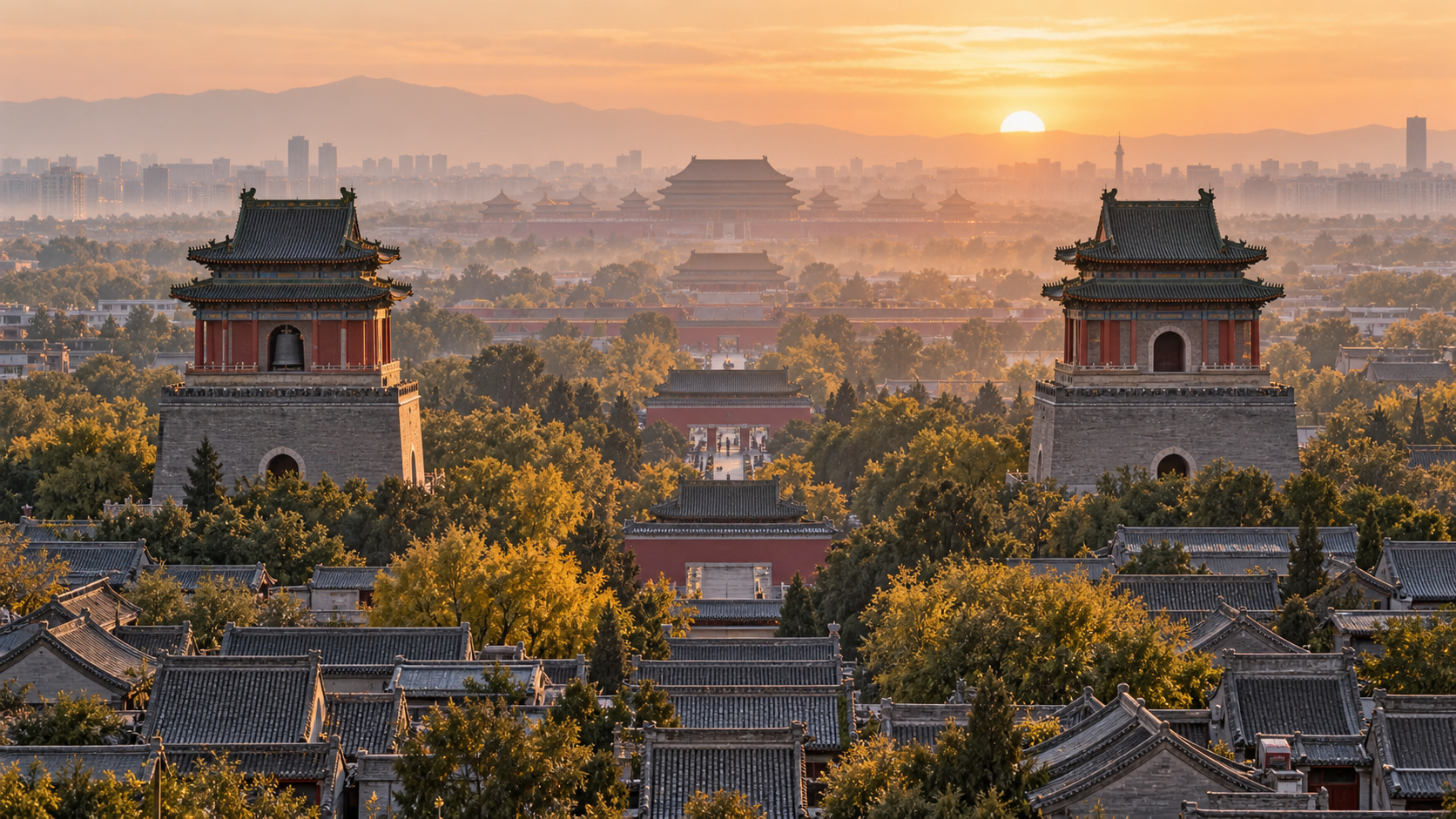
The Beijing Central Axis runs north to south through the historic city and brings palaces, gardens, sacrificial structures, ceremonial buildings and public buildings into one ordered ensemble.
- 02
The 7.8-kilometer Central Axis links the Bell and Drum Towers, Jingshan, the Forbidden City, Tian'anmen, Zhengyangmen and Yongdingmen.
- 03
Peking Opera combines music, vocal performance, speech, mime, dance and acrobatics, and developed through the blending of several regional opera traditions in Beijing.
BILINGUAL TRANSCRIPT
双语全文
-
Welcome to Beijing, a city shaped by two scales: monumental order and intimate courtyard life.
欢迎来到北京。这座城市同时拥有两种尺度:宏大的秩序与亲近的院落生活。
-
To understand its character, begin with the Central Axis, the north-south spine of the old city.
要理解北京的性格,可以先从贯穿老城南北的中轴线开始。
-
It gathers gates, palaces, gardens, ceremonial buildings, and the Bell and Drum Towers into one long sequence.
城门、宫殿、园林、礼仪建筑和钟鼓楼,被组织在一条漫长的空间序列上。
-
The arrangement expresses balance, hierarchy, and an old idea of how a capital should be organized.
这种布局体现了均衡、层次,以及古人关于都城应当如何组织的观念。
-
At its heart stands the Forbidden City, where courtyards unfold one after another and carefully control movement and view.
故宫位于这套秩序的中心,层层院落展开,也精心控制着人的行进与视线。
-
Farther south, the Temple of Heaven connects architecture with the sky, the seasons, and ancient ritual.
再向南,天坛把建筑与天空、季节和古代礼仪联系起来。
-
This grand geometry gives Beijing its solemn and unforgettable public face.
这种宏大的几何秩序,构成了北京庄重而难忘的公共面貌。
-
But turn into a hutong, and the scale immediately becomes human.
但只要转进一条胡同,城市的尺度马上就变得亲近。
-
A siheyuan arranges rooms around a shared courtyard, with doors and windows facing a common center.
四合院把房间围绕共同的院子布置,门窗朝向同一个生活中心。
-
In these lanes, daily life has long been built from neighbors, bicycles, shade, cooking smells, and conversation.
在这些巷子里,邻里、自行车、树荫、饭菜香和交谈,共同组成了长久的日常生活。
-
Hutongs are not leftovers from the palace city; they are essential to how Beijing feels.
胡同不是宫城旁边的历史剩余,而是北京之所以像北京的重要部分。
-
They place ordinary routines beside walls, gates, towers, and centuries of public memory.
它们让普通人的日常,与城墙、城门、楼阁和数百年的公共记忆并肩存在。
-
Beijing's culture also speaks through performance, especially Peking Opera.
北京的文化也通过舞台表达,其中最有代表性的就是京剧。
-
The art combines singing, speech, movement, combat, costume, music, and symbolic makeup.
这种艺术把唱、念、身段、武打、服装、音乐和象征性的脸谱结合起来。
-
A few steps on stage can suggest a long journey, while a painted face can reveal loyalty, courage, or danger.
舞台上的几步可以表现漫长旅程,一张脸谱也能提示忠诚、勇敢或危险。
-
Its disciplined signs create a large imagined world, much as the ordered city contains countless private stories.
严格而凝练的舞台符号创造出广阔的想象世界,就像秩序严整的城市容纳着无数私人故事。
-
Food offers a warmer and less formal route into the same local character.
饮食则提供了一条更温暖、更日常的路径,带人进入同一种地方性格。
-
Peking duck, zhajiangmian, sesame pastries, and neighborhood snacks belong to different occasions, but all carry local memory.
北京烤鸭、炸酱面、芝麻点心和街坊小吃属于不同场合,却都带着地方记忆。
-
The city is therefore much more than a collection of famous historic sites.
因此,北京远不只是著名历史景点的集合。
-
It is a relationship between axis and alley, ceremony and humor, public history and private routine.
它更是一组关系:中轴与巷子、礼仪与幽默、公共历史与私人日常。
-
Today, the subway may carry you beneath the city in minutes, but above ground Beijing still asks you to slow down and read its layers.
今天,地铁可以在几分钟内载着你穿行于城市地下;回到地面,北京仍会让你放慢脚步,读懂它层层叠叠的时间。
-
Stand on the Central Axis at dusk, and the capital feels measured, ceremonial, and almost timeless.
黄昏时站在中轴线上,这座都城显得庄重、有序,仿佛超越了时间。
-
Turn into a hutong, and a bicycle bell, a neighbor's greeting, or the smell of dinner brings that vast history back to human scale.
转进胡同,一声自行车铃、一句邻里问候,或一缕晚饭香气,又把浩大的历史带回人的尺度。
-
That is Beijing: a city where the grandeur of an imperial capital and the warmth of an ordinary courtyard continue to face each other.
这就是北京:一座让帝都的恢宏与寻常院落的温度,始终彼此映照的城市。